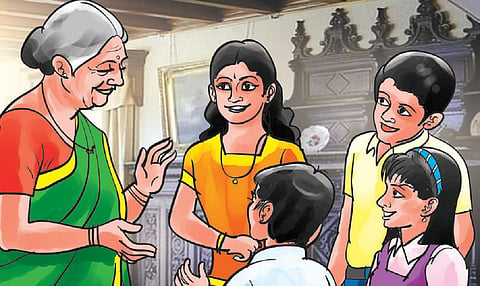

மித்ரன்: இன்று நாம் என்ன பார்க்கப் போகிறோம் தெரியுமா?
இனியன்: Apostrophe.
பாட்டி: Apostrophe பார்ப்பதற்கு எப்படி இருக்கும்?
மித்ரன்: பார்ப்பதற்கு commaபோன்று இருக்கும். ஆனால், அதை எழுத்திற்கு மேலே எழுத வேண்டும். (‘)
உமையாள்: Very good. Apostrophe-ஐ எங்கு எப்போதெல்லாம் பயன்படுத்த வேண்டும் என்று சொல்லுங்க பாட்டி.
பாட்டி: Noun உடன் சேர்த்து உரிமை (possession or ownership) எடுத்து பேசும்போது, noun-ற்கு அடுத்து apostrophe வரும். அந்த சமயத்தில், Apostrophe-க்கு அடுத்து s என்ற எழுத்தை சேர்த்து எழுத வேண்டும். (Use apostrophe to show possession).
இனியன்:
My uncle’s daughter is coming to my home today.
Iniyan’s bat was missed yesterday.
Did you find Mithran’s storybook?
I am a teacher’s favourite person.
பாட்டி: noun அல்லது pronoun-இல் ஏற்கெனவே ‘s’ கடைசி எழுத்தாக இருந்தால், ‘s’ என்ற எழுத்திற்குப் பிறகுதான் Apostrophe வரும். ‘s’-ற்கு முன்னால் எழுதக்கூடாது மேலும், இந்த விஷயத்தில், Apostrophe-க்கு பிறகு மற்றொரு ‘s’-ஐ சேர்க்க வேண்டியதில்லை.
இசை:
The dogs' food got wet due to the rain.
Students' worksheets are yet to be corrected.
பாட்டி: அன்றாட மொழியில் நிறைய இடங்களில் வினைச் சொற்களை சுருக்கி பேசுவோம் (Verb Contractions). எழுத்து மொழியிலும் கூட, அதேபோல வார்த்தைகளை சுருக்கிப் பயன்படுத்தலாம்.
மித்ரன்: என்ன மாதிரியான வார்த்தைகளை சுருங்க சொல்லுவோம் பாட்டி. கொஞ்சம் விளக்குங்களேன்.
பாட்டி: இந்த Verb Contractions அட்டவணையைப் பாருங்கள். இதில் ஒருபுறம் விவரித்தும், மறுபுறம் சுருக்கியும் எழுதியிருக்கிறேன்.

பாட்டி: Verb Contractions பயன்படுத்தக் கூடிய இடங்களில் எல்லாம் Apostrophe வரும். (Common Verb Contractions for Everyday Use)
உமையாள்:
Don’t you think you will get the first prize in the chess competition?
They weren’t at the playground.
I’m willing to help you to complete your assignment.
Shouldn’t she go there now?
He said that it wasn’t his book.
(தொடரும்)
- கட்டுரையாளர்: மொழித்திறன் பயிற்றுநர்